
What is a split heating cooling dehumidifier?
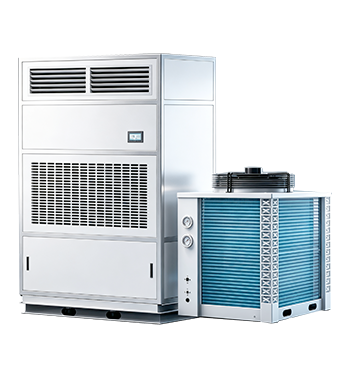
A split heating cooling dehumidifier is a two-part climate system: an indoor unit conditions the air and an outdoor unit rejects or absorbs heat through a refrigerant circuit. The same machine dehumidifies, heats, cools and ventilates, and it holds temperature and humidity to independent setpoints. Because the compressor sits outside, indoor noise and compressor heat stay out of the conditioned room.
What the two halves actually do
Indoor unit
Holds the evaporator, reheat coil or condenser section, fan and controls. It draws room air across the cold coil so water condenses out.
Outdoor unit
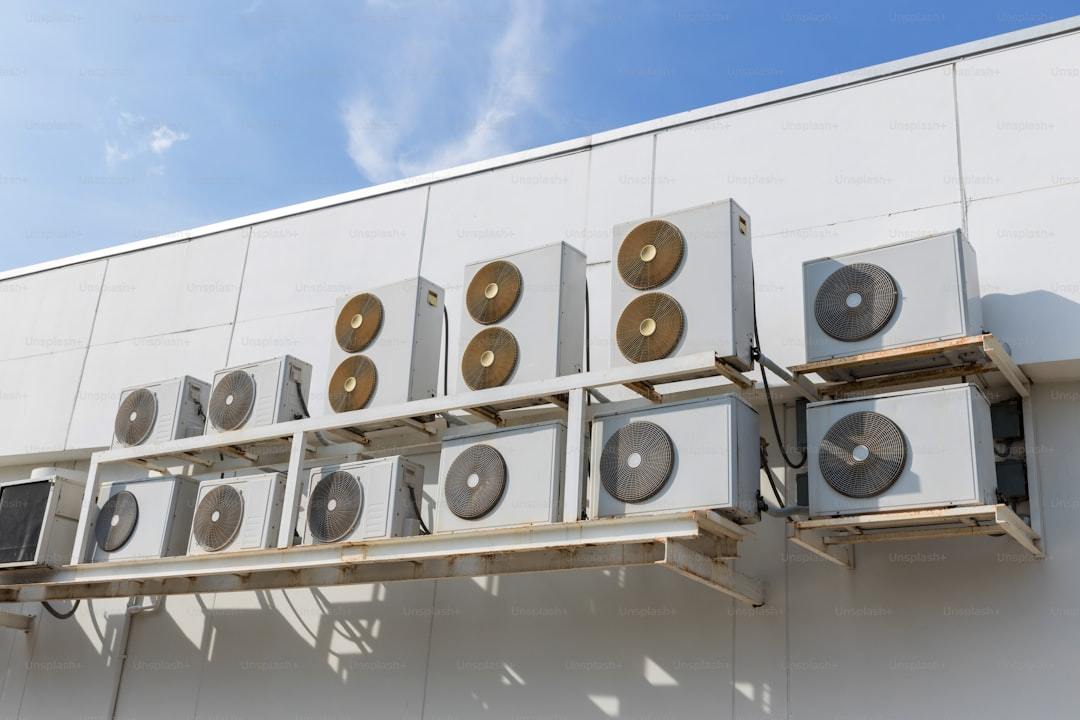
Holds the compressor and the heat exchanger that dumps or picks up heat from outside air. Keeping it outside removes the noise and heat from the room.
Refrigerant link
Insulated copper piping and control wiring connect the two, which is why line length and lift have to be checked at design stage.
Condensate path
Water leaves the indoor coil by gravity where the drain can fall, or through a pump where it cannot.
The three operating modes
Cooling with dehumidification is the summer mode: air is cooled below its dew point, water drops out, and the room gets both drier and cooler. Heating with dehumidification covers the cold season: moisture is still removed, but the recovered heat is returned to the room instead of being thrown away, so the space does not go cold while being dried. Constant-temperature dehumidification uses the reheat section to cancel the cooling effect, holding the setpoint while only the humidity changes.
That third mode is what separates this machine from an ordinary air conditioner. A standard AC dries as a side effect of cooling and stops drying the moment the thermostat is satisfied, so a room can be cool and still damp.
Where a split system is the wrong choice
It is still a condensing machine. Below roughly 15 °C capacity falls and below 5 °C the coil ices, so cold stores and unheated winter halls need desic rotor technology instead. Split systems also cost more than a single packaged unit of the same capacity, and the refrigerant link means a qualified installer is required.
Representative project configuration
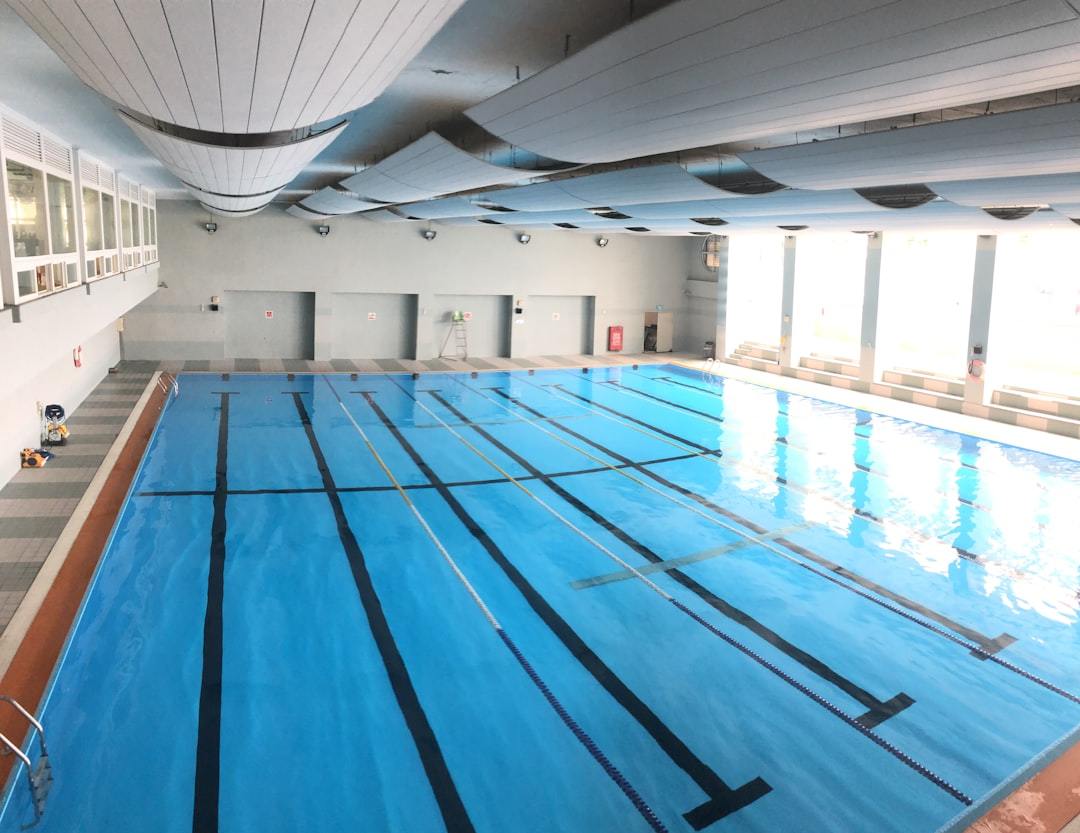
A hotel pool hall had condensation on glazing and corrosion on steelwork. Guests wanted 28 °C air and 55% RH while the water stayed at 27 °C, which a standard air conditioner could not deliver without over-cooling.
Outdoor units were placed on a roof plant deck, indoor units in a service corridor, with condensate to a trapped waste line. Pool halls carry a chlorinated atmosphere, so coil coatings and materials must be specified for it.
Split versus packaged, at a glance
| Aspect | Split system | Single packaged unit |
|---|---|---|
| Indoor noise | Low, compressor is outdoors | Higher, compressor in or near the room |
| Room heat gain | Low | Compressor heat stays in the space |
| Functions | Heat, cool, dehumidify, ventilate | Usually dehumidify only |
| Installation | Refrigerant work by qualified installer | Plug-in or simple ducting |
| Low-temperature duty | Limited below 15 °C | Same condensing limit |
| Typical use | Pools, villas, controlled environments | Warehouses, plant rooms, job sites |
Specification check: confirm the pipe run and vertical lift between indoor and outdoor units before ordering, because both limit how far apart they can sit. East Dehumidifier sizes split systems from room volume, insulation and the moisture source, not from floor area alone.
Related questions
Specifying a split system?
Send room volume, insulation level, moisture source and target conditions. East Dehumidifier will return a capacity and piping proposal.